




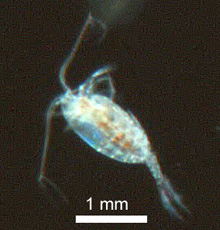


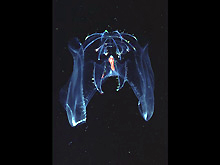
This Bathycyroe fosteri, a midwater lobate ctenophore, is about 5 centimeters tall. Ctenophores have such fragile bodies that they cannot be preserved for study; they simply dissolve in any chemical solution. New species are described from photographs and living specimens, which are carefully collected by hand or in large containers attached to remotely operated vehicles or submersibles. Click image for larger view and image credit.
The Heart of the Sea: Exploring Marine Biodiversity of the Celebes Sea
Gregory Stone
New England Aquarium
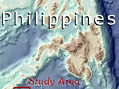
The tropical ocean surrounding the southern Philippines is considered the cradle of biodiversity for shallow-water marine animals, but there has been little biological exploration of its deep waters, twisted trenches, and sea floor basins. Low sea levels during ancient times kept the basins isolated from each other, which may have allowed unique species to develop within them. The abundance of shallow-water species in this area suggests that ancient geological processes allowed marine life to evolve into a tapestry of animals and plants unlike anywhere else on Earth. Generally, the longer the period of time allowed for evolution and the greater variety of ecological niches available lead to an increased diversity of species. The Celebes Sea and surrounding marine environments perfectly illustrate this rule, which is why this region could be called the “heart of the sea.”
The area, which is sometimes called the “Coral Triangle,” includes parts of the Philippines, Malaysia and Indonesia and is centered on the Celebes Sea. Divers and scientists have flocked to the region for decades because of the clear, warm water and high levels of species diversity. Almost like an underwater rainforest, the variety of shallow-water corals, fishes, and invertebrates is unparalleled anywhere else in the world. This biological hotspot is a high priority area for conserving marine life.
An intriguing feature of the Celebes Sea is its shallow rim, which has insulated its deep waters from the frigid water that flows through virtually all other deep oceans. As a result, the water has has remained warmer, even at great depths, for 25 million years. At one point in Earth’s history, all deep ocean waters were similarly warm. As plate tectonics forced Antarctica to become isolated and cold, a massive icecap developed, chilling the surrounding ocean water. This colder, denser seawater sank and began flowing around the globe in what oceanographers now call “Antarctic bottom water,” chilling the deep sea and forever changing the marine life there. Because the Celebes Sea has had less exposure to this cold water, the deep-sea life there may be different from other areas and perhaps contains ancient biological relicts.
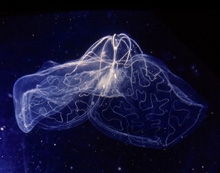
Deep-water exploration continues to reveal the existence of previously unknown gelatinous animals like this transparent lobate ctenophore, which has not yet been named by scientists. Although many midwater gelatinous animals are undoubtedly still to be discovered, we do know that they are extremely important predators in this ecosystem. As we learn more about them, we will better understand the complex biological, chemical, and physical interactions within this realm — suspended between the surface and the sea floor. Click image for larger view and image credit.
We expect to make spectacular findings, including discovering new species and capturing images of beautifully strange creatures. We may finally determine whether deep-sea species are as varied in this area as are the shallow-water species. A remotely operated vehicle (ROV) will allow us to take photographs and video and collect specimens who live as deep as 3,000 meters, while samples collected in trawls and plankton nets will be used for detailed taxonomic and genetic analyses.
The research accomplished by this expedition will delve deeper than any previous work to understand one of the planet’s most ecologically rich places. We will make our research results available to the regional governments and conservation organizations — including Conservation International, World Wildlife Fund, and The Nature Conservancy — to aid management and protection of the area’s unique marine life.For more information on the Coral Triangle and conservation in the region:
http://www.coraltrianglecenter.org/ 
http://www.worldwildlife.org/wildplaces/ss/photos.cfm
http://web.conservation.org/xp/CIWEB/regions/priorityareas/marine/seascapes.xml


