


Photo & Video Log
This page contains photos and videos taken during the Bonaire 2008: Exploring Coral Reef Sustainability with New Technologies exploration from January 7 to 30, 2008.
The Bonaire, Netherlands Antilles, is arguably the most pristine coral reef environment in the Caribbean. Click on any image to view a larger version and for additional information.
If a movie camera icon  is present, a QuickTime video can be viewed by clicking on the image. Other
video formats are available on additional linked pages. If a Podcast icon
is present, a QuickTime video can be viewed by clicking on the image. Other
video formats are available on additional linked pages. If a Podcast icon  is
present, a video or audio file is available for download or you can subscribe to the RSS Podcast Feed.
is
present, a video or audio file is available for download or you can subscribe to the RSS Podcast Feed. 
If a slideshow icon  is
present, a visual log of exploration images can be viewed. You can scroll
through them one by one, or select the play button for an automatic slideshow.
is
present, a visual log of exploration images can be viewed. You can scroll
through them one by one, or select the play button for an automatic slideshow.
(HR) = "High Resolution" images available.
Video & Slideshows

January 21
Fetch1 AUV surveying parallel to the shoreline at the 18 Palms dive site on Bonaire. (Quicktime, 1.2 Mb.)

January 21
Fetch1 AUV surveying within the Bonaire National Marine Park. (Quicktime, 1.9 Mb.)

January 21
Fetch1 AUV in action on a trial dive to ensure the vehicle is still sufficiently buoyant. (Quicktime, 774 Kb.)

January 16
Gavia AUV collecting underwater imagery along with water quality data at Nukcove. (Quicktime, 1.1 Mb.)

January 16
Scuba divers are performing video and photo transect surveys of the sea floor at Nukove. (Quicktime, 1.1 Mb.)

January 12
The Hafmynd Gavia AUV allows for unprecedented bathymetric sonar mapping. (Quicktime, 1.1 Mb.)

January 12
Underwater video survey of the Bonaire sea floor by UBC Gavia AUV. (Quicktime, 1 Mb.)
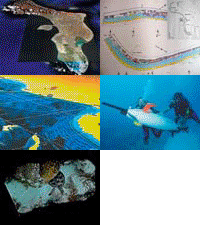
Plan
View a Bonaire 2008 slideshow of the exploration maps and AUV images.
Images
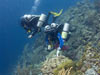
Mission Summary
Expedition members descending to the deep reef using trimix technical diving.
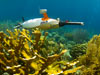
Mission Summary
Populations of elkhorn coral were seriously affected by recent hurricanes that have passed close to Bonaire.
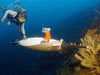
Mission Summary
The Fetch1 AUV and one of its developers pass by a large clump of the sponge Callyspongia vaginalis.
Mission Summary
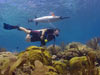
Diver surveys complemented the AUV datasets and will address how much Bonaire's reefs have changed since the last survey.
Mission Summary
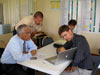
Bonaire island leaders and Bonaire's marine park manager listen as some of the preliminary findings from surveys are explained.
Mission Summary
Dr. Patterson contracted the disease Dengue fever, a viral illness transmitted by mosquitoes.
January 27
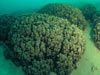
Freshwater microbialites.
January 27
Shore operations on Klein Bonaire.
January 27
Photo taken by the UBC-Gavia AUV at 147 meters.
January 26
After a great day of testing both Gavia AUVs, they are loaded into the back of a pickup truck to head back to “science headquarters.”
January 26
Conducting AUV operations from a boat, Alex tracks one of the Gavia AUVs using a heavy-duty computer.
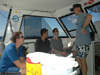
January 26
An impromptu science meeting on a boat off the island of Bonaire.
January 26
Even though we arrived in Bonaire during the rainy season, the sun was always shining.
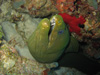
January 25
Moray eel peering out from its coral home. (HR)
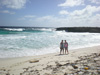
January 25
Two University of Delaware Study Abroad Program students enjoying a typical island day on Bonaire.
January 25
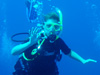
Another University of Delaware student, Sarah Hendrickson, scuba diving in Bonaire.
January 24
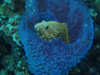
Rockhind in a sponge photographed while free diving off Klein Bonaire in about 20 ft. of water. (HR)
January 24
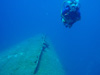
Kat McCole, a University of Delaware student, diving on the Hilma Hooker, the famous wreck located on the southwestern side of Bonaire.
January 24
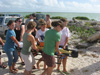
Students from the University of Delaware Bonaire Study Abroad Program carrying an AUV toward the water.
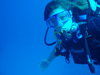
January 24
Ashley Schutt, a study abroad program student, diving off the coast of Bonaire.
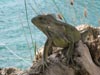
January 23
The animals encountered on the island are very different from those we encounter while at sea on a ship. (HR)
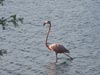
January 23
Another animal not commonly encountered. Pink flamingos are very common and inhabit saline ponds on the island of Bonaire. (HR)
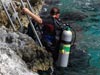
January 23
Preparing to conduct underwater video transects, scientists enter the water from a platform at Oil Slick Leap dive site. (HR)
January 22
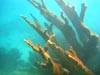
Elkhorn coral, once prevalent around the island's leeward coast, can only be found in a few areas and then in only small patches. (HR)
January 22
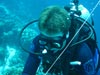
Keeping the surface float GPS line taut is essential for accurate positioning for video transects. (HR)
January 22
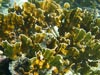
Millepora complanata, known as fire coral, is frequently found in the waters close to the shore surrounding Bonaire. (HR)
January 21
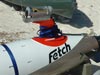
Preparing to launch, scientists attach the nose of the Fetch AUV which contains the side scan sonar, some water quality sensors, and the color video camera. (HR)
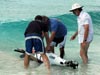
January 21
Bernard, Daniel, Mark, and Ken launch the Fetch AUV off the beach at the Invisibles dive site. (HR)
January 21
Fetch and Gavia AUVs simultaneously conducting survey missions at the Invisibles dive site. (HR)
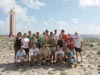
January 20
The University of Delaware Study Abroad group stopping at the lighthouse (on the south end of the island) during an educational tour of Bonaire. (HR)
January 20
One of the study abroad students, Nate Maier, free diving at a dive site on the south end of Bonaire. (HR)
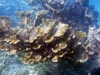
January 20
Elkhorn coral, is found in coral reefs throughout the Caribbean and in southern Florida. (HR)
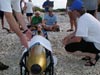
January 20
Students gather around as members of the science party prepare to launch the Gavia AUV at Pink Beach. (HR)
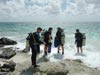
January 19
Several members of the scientific dive team enter the water navigating by GPS along a predetermined heading and conducting video transects to determine percent coral cover. (HR)
January 19
Staghorn coral has been greatly reduced in abundance, most likely the result of several hurricanes passing through the region. (HR)
January 19
Much of the healthy coral cover recorded in the 1980s has been reduced to coral rubble and sand by Hurricane Lenny, which impacted the island in 1999. (HR)
January 19
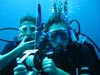
Two members of the scientific dive team. (HR)
January 17
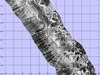
Example of a high-resolution side-scan sonar mosaic created from survey data collected by the GeoSwath sonar on the Gavia AUV. (HR)
January 17
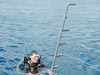
Scientists look for patterns of the oxygen concentrations over the reef, which provides an indicator of the health and productivity of the coral system. (HR)
January 17
Bernard demonstrating the use of the acoustic pinger. (HR)
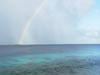
January 17
After a few showers, a brilliant rainbow emerges. (HR)
January 16
At the Nukove dive site scientists are using both Gavia AUVs to survey the reefs. (HR)
January 16
Scuba divers are performing a photo transect survey of the Nukove sea floor down to depth of 40 meters. (HR)
January 16
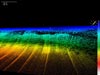
The bathymetric sonar onboard the Gavia AUV provides an incredibly dense map of the reef structure including the overhanging coral on the crest of the reef. (HR)
January 16
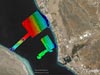
Bathymetric charts overlaid on top of a satellite photos help to identify target areas for deep trimix diving. (HR)
January 15
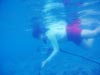
Carried over the reef on the water surface, the BOA array of temperature sensors was deployed in 170 feet of water at Nukove. (HR)
January 15
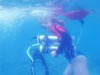
The data loggers collect and record the temperature data from the BOA array and are connected to a float that maintains the upward position of the array. (HR)
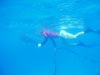
January 15
Dana snorkeling and Jim on scuba, carrying the array cable over the reef. (HR)
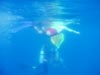
January 15
Deploying the anchors for the BOA array, scientists let enough air out of the lift bags to allow a slow controlled descent and landing on the sea floor, thus protecting the fragile coral reef. (HR)
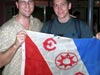
January 14
Daniel is a recent inductee in the Explorers Club of New York and is carrying one of their flags that has been on expeditions since 1934. (HR)
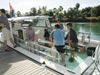
January 14
Members of the science party load the Green Flash dive boat with the two Gavia AUVs and dive tanks. (HR)
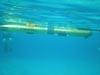
January 13
Floating gently just below the surface with only the communications tower above the surface, the Gavia AUV awaits another mission command. (HR)
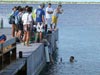
January 13
Student Explorers from the University of Delaware gather dockside for an impromptu lecture by Art, introducing the many features and capabilities of the Gavia AUV. (HR)
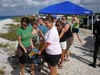
January 13
Student assistants from the University of Delaware Study Abroad Program help carry the Gavia AUV to the beach for a launch. (HR)
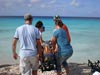
January 13
Eager to lend a hand, another set of undergraduate student volunteers assists in bringing the AUV down to the water line at Pink Beach. (HR)
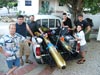
January 12
Gavia AUV team loaded up with two robots and support equipment, and bound for a day of field operations. (HR)
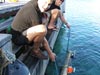
January 12
Art and Alex conducting trim and buoyancy testing with the UBC Gavia vehicle dockside prior to mission operations. (HR)
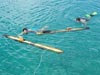
January 12
Hilary and Alex swimming along side the two Gavia AUVs, making last minute visual inspections. (HR)
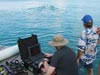
January 12
Richard at the controls of the Gavia AUV about to hit the "go" button and initiate a mission to map the coral reef. (HR)
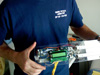
January 10
Dale holding the brain box for the BOA array. (HR)
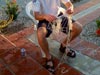
January 10
Jim works on untangling a low tech device, a cave reel. (HR)
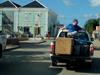
January 10
Richard of Hafmynd (maker of Gavia) leads the caravan of trucks leaving customs with our gear! (HR)
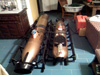
January 10
Two Gavia AUVs, ready for action. (HR)
January 8
Ramon, Art, and Tom review the capabilities of multibeam sonar. (HR)
January 8
Ramon tries his hand at driving Fetch1 AUV. (HR)
January 8
Fetch1 AUV being launched by Ramon at 18 Palms. (HR)
January 7
A stealthy predator, the trumpetfish likes to imitate sea whips and hide next to other fishes like parrotfish and jacks. (HR)
January 7
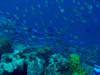
The staghorn coral grows quickly. This stands has grown back since Hurricane Lenny in 1999. (HR)
January 7
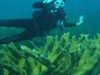
Many fish species make a living eating tiny zooplankton that pass over the reef. (HR)
January 7
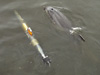
Elkhorn coral lives in shallower water and is also prone to destruction by big waves caused by hurricanes. (HR)
Mission Plan
Gavia AUV swimming with a dolphin. (HR)
Mission Plan
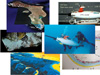
A sample of some of the tools and technologies that will be employed during this mission. (HR)
Oceanography
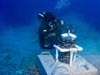
A diver deploying a bottom-mounted acoustic Doppler current profiler (ADCP). (HR)
Oceanography
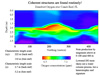
Map of dissolved oxygen made by the Fetch1 AUV performing a "yo-yo" maneuver over a coral reef in Florida. (HR)
Oceanography
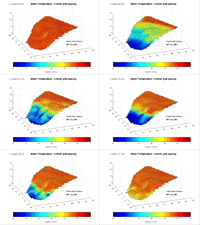
Animation of data acquired by the Scripps BOA temperature sensors array.
AUVs
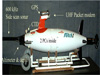
The Fetch1 AUV, like other AUVs, is a taxicab for sensors. (HR)
AUVs
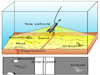
A side scan sonar towfish showing the two sonar beams, and the resulting image that is made by the computer from the sonar echoes. (HR)
AUVs
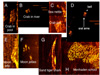
Examples of organisms imaged by high frequency side scan sonar using an AUV. (HR)
AUVs
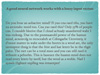
A fun example of how the brain processes words using its own neural network classifier. (HR)


